“Who Are We?” A New Video About Marin’s Future
|
Who Are We? was directed by Marin County District 1 Supervisor Susan Adams and Staff Kiki La Porta and Susannah Clark. It was produced at the Community Media Center of Marin by Alejandro Palacios, Scott Calhoun, and Michael Eisenmenger.
Programming from Marin TV, produced at the Community Media Center of Marin. Visit us at:http://www.cmcm.tv and support community media. |
Are you frustrated by the negativity of the debate on planning and Marin’s future? Here’s a new video that asks the positive question “What do you want for Marin’s future?” and seeks answers in the vision of our youth. Former County Supervisor Susan Adams and her staff asked young people — high schoolers … college students … future leaders of their generation–to talk with them about their experiences growing up and living here, what’s important to them, what they love about Marin, and what they see ahead.
Take a look, and if you think it has value, share the link with your friends via e-mail or your social media. |
VIDEO FROM “CHOOSING THE FUTURE WE WANT”
|
Presenters:
|
On September 17, 2014, a sizable audience gathered at City Hall for “Choosing the Future We Want – Housing Choices for Marin.” Speakers explored how we can bring our built environment back into alignment with nature – while at the same time extending our tradition of walkable towns, rich in transit and diversity, and reducing our greenhouse gas emissions by reducing our driving.
|
“Plan Bay Area” Forum Draws Crowd
|
|
On May 9, 2013 Sustainable San Rafael, along with Sustainable Marin, The Marin Environmental Housing Collaborative, The League of Women Voters, The Marin Conservation League and Dominican University sponsored our second forum on the topic of planning the future of our communities in the era of climate change. “Planning the Future We Want (part 2)” drew an energized and attentive crowd of about 200 turned out at Dominican’s Angelico Hall.
This time a panel of experts drilled down into the specific implications of Plan Bay Area: How it fits into the larger picture of the state’s efforts to reduce GHG emissions and fight climate change . . . How it continues a long history of enlightened local planning to protect Marin’s unique assets . . . Whether or not it threatens local communities’ ability to control environmental impacts and preserve their quality of life. |
Fairfax/San Rafael Trolley to be Studied
|
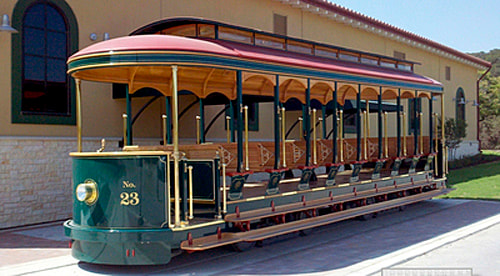
Most of the towns in Marin were once linked by a popular interurban rail network, but like so much mass transit, they were all abandoned in the 1940s in favor of cars.
Now, we’re starting to re-think that move. As reported in the Marin IJ on February 24 (and, as endorsed in an editorial on March 3) the Transportation Authority of Marin and several local agencies are taking a serious look at the idea of a modern, self propelled trolley between Fairfax and San Rafael using a combination of surface streets and the old railroad right-of-way. |

Read the full story:
By Richard Halstead – February 24, 2013 Alan Nichol SAUSALITO ARCHITECT Allan Nichol and former San Anselmo Councilman Peter Breen would like to take Marin County back to the future by constructing an electric trolley system that would run from Fairfax through San Anselmo all the way to San Rafael. With the help of Mary O’Mara, executive director of Marin Link, Nichol and Breen have formed Marin Trolleys, a nonprofit advocacy organization, and convinced the Transportation Authority of Marin to spend $100,000 to study the feasibility of such a plan. “You have to remember,” Nichol said. “That the communities in Marin were developed along train lines. There was a whole electric trolley and steam engine system throughout the whole North Bay. There were electric street cars that went from Sausalito all the way to Ross and San Rafael.” That system, however, had vanished by the 1940s, replaced by the automobile. Dianne Steinhauser, TAM’s executive director, said the feasibility study will be done sometime this year, Breen said it could begin as early as May. The city councils of all four municipalities that the trolley would pass through have endorsed pursuing the idea, and 40 businesses located on San Rafael’s Fourth Street have signed a petition stating their support. Perhaps the biggest motivator for Nichol is the desire to do something to reduce the greenhouse gases that are triggering global warming. “We’re creating more cars than babies here in Marin,” Nichol said. “We spend over $2 billion a year on the automobile, and 60 percent of our greenhouse gases come out of the tailpipe. The trolley is a real interesting way to get people out of their cars.” Kiki La Porta, president of Sustainable Marin and a co-founder and board member of Sustainable San Rafael, said the county’s network of sustainability organizations are big advocates of public transportation. The Proposed Plan “While SMART (the Sonoma-Marin Area Rail Transit District train and path) is going to provide a main artery, we still have to get to it,” La Porta said. “It is insane for all of us to be taking single-person, personal transportation to get from Point A to Point B, even if Point B is public transit. We’d love to see a method of moving people, flowing people toward public transit.” Steinhauser said a chunk of the federal money that will be used for the feasibility study is available because some of the areas that would be linked by the trolley meet the criteria for California’s Sustainable Communities Strategy. “The Sustainable Communities Strategy is a regional effort to link transportation funding and transportation improvements to those locations that are willing to consider higher-density housing near transit,” Steinhauser said. “San Rafael is obviously one of those locations. They’ve done quite a bit of work around the SMART station site downtown to look at options for higher-density housing.” Whistlestop, a San Rafael nonprofit that serves senior citizens, plans to convert its downtown property into a five-story affordable senior housing and services center by 2017. The new facility will house 50, one-bedroom affordable housing units for seniors, plus an active aging center and a large activity hall on the building’s top floor. Joe O’Hehir, Whistlestop’s CEO, said a trolley would be a more convenient and less expensive way to transport seniors in Fairfax and San Anselmo to the Whistlestop facility. Currently, he said Whistlestop has to send a van out to pick up some of these seniors. “Transportation is the No. 1 issue that older adults face in Marin County,” O’Hehir said. One of the big questions facing trolley proponents, however, is whether enough people would climb out of their cars and onto the trolley. Before hatching the idea of a Ross Valley trolley, Nichol championed the development of a trolley for the Sausalito to Mill Valley corridor. A feasibility study conducted on that idea in 2009, indicated the potential ridership was too small to make trolleys financially viable (continued in column 2) ... |
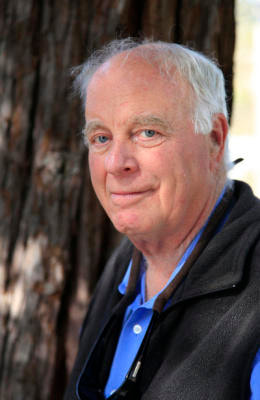
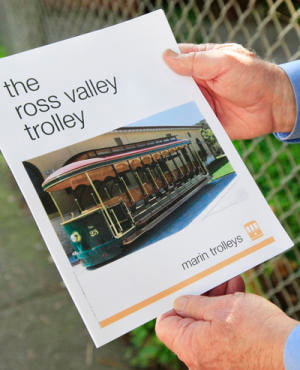
Nichol said the study on the Sausalito to Mill Valley trolley was badly flawed. And he says, “Ross Valley is a much better route.” Breen said he jumped aboard the trolley bandwagon after Allen shifted his focus to a Ross Valley route because the county’s public transit system lacks a “strong east-west arm.” Breen said if the trolley extended as far west as White’s Hill, just west of Fairfax, then students at the fast-growing White Hill Middle School could ride it to school. He said currently parents of the students add substantially to the congestion on Sir Francisco Drake Boulevard. Breen, a former member of the SMART board, said ideally the trolley could also extend into San Rafael’s densely populated Canal neighborhood, where some residents can’t afford a car. The trolley will not impede traffic on Sir Francis Drake Boulevard, Nichol said. That is because the current plan is to route it along Center Boulevard, down a short patch of the Miracle Mile and then onto Fourth Street stopping at Monteceito Shopping Center. And Nichol said overhead wires would not be needed to power the trolleys because they would utilize lithium batteries and fuel cells. Another big question, however, is how the system would be paid for. Breen said trolley proponents don’t envision proposing any new taxes to cover the costs — even though its anticipated that a trolley line would boost the property values of homes located near it by 20 percent. He said money for continuing operations could be a particularly difficult issue. “We have plans to set up a public/private partnership,” Breen said. “But the difficulty with transit is everybody likes to build it; but nobody wants to pay to run it.” Nichol said ultimately it may come down to how much Ross Valley residents want a trolley system. “If it is going to be successful,” Nichol said, “they’re going to have support it both politically and financially.” In January, Breen presented the idea to the San Anselmo Chamber of Commerce. Connie Rodgers, the chamber’s president and CEO, said, “We are definitely intrigued by the trolley possibility.” Rodgers said the chamber expressed its support for exploring the possibility further but stopped short of endorsing the project. She said the chamber is hopeful that a trolley might reduce congestion on Sir Francis Drake Boulevard. Rodgers said one question the chamber has is: “Who is going to be left holding the financial responsibility if it is not cost effective.” |